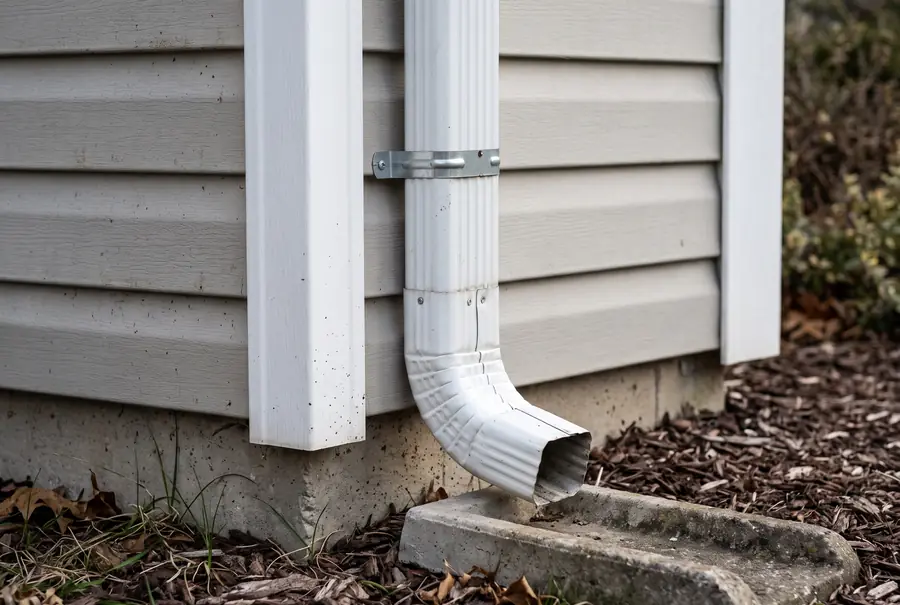
Downspout water should go somewhere it cannot return to the house or reach a neighbor. Salem Hometown Gutters connects callers with independent local gutter contractors, who give the estimates and do the work. The City of Salem's guidance on protecting property from flooding puts private drainage in the owner's hands and asks that it direct water away from the foundation and not onto neighboring property.
Option
When
Watch for
Drain line to the street
Most older lots
Blockages, roots, collapse
Splash block
Ground falls away
Not toward a slope or neighbor
Extension
A few feet more
Trip hazard
Approved on-site facility
Newer developments
Owner maintenance
How big is Salem's stormwater system?
The City of Salem's stormwater utility serves a large share of the city's properties, and the city describes about 6,000 stormwater facilities, with private ones maintained by their owners. Roof water from many Salem houses ends up in that system, which is why a working connection matters.
How do I check my drainage?
Watch in rain. Does each downspout run freely?
Look at the base. Is water pooling?
Run a hose into each drain line.
Look for wet spots in the yard or crawl space.
Check the street drain for leaves.
What problems show up?
Problem
Likely cause
Water pooling at the foundation
Disconnected downspout
Backup at the downspout base
Blocked drain line
Wet crawl space
Overflow; poor grading
Erosion on a slope
Discharge onto the slope
Neighbor complaints
Water directed onto their lot
How is drainage fixed?
Fix
When
Reconnect the downspout
Loose or missing connection
Clear the line
Leaves, roots
Replace the line
Collapsed or broken
Add a clean-out
For future clearing
Re-grade
Ground slopes toward the house
How far should water go from the house?
There is no single number for every lot. The goal in the City of Salem's guidance is that drainage carries water away from the foundation and not onto a neighbor's property. On level ground, an extension of several feet onto a splash block helps; on most older Salem lots, a buried line to the street is already there and needs to work.
What to check in a crawl space
Sign
Likely source
Standing water after rain
Overflowing gutters or a disconnected downspout
Damp soil along one wall
Downspout discharge near that wall
Musty smell
Ongoing moisture
Efflorescence on the foundation
Water moving through concrete
How to plan a drainage upgrade
Map every downspout and where it goes.
Test each line with a hose.
Fix the gutters that overflow.
Repair or replace broken lines.
Add clean-outs.
Re-grade soil to slope away from walls.
Who does what
Job
Who usually does it
Gutters and downspouts
Gutter contractor
Clearing buried lines
Gutter, drain or plumbing contractor
Replacing buried lines
Drainage or excavation contractor
Re-grading soil
Landscaper or excavator
Questions about public storm drains
City of Salem
Myths about drainage
Myth
Reality
Any downspout extension solves it
Only if the ground falls away
Buried lines never need checking
Roots and leaves block them
Overflow is harmless in a short shower
In Salem it happens for months
The city maintains the pipe from my house
Private drainage is the owner's job
Seasonal drainage checklist
When
Task
September
Hose-test every line
November
Clear gutters and curb drains of leaves
December
Watch flow in heavy rain
After any storm
Check for separated downspouts
Spring
Fix anything found over winter
The short answer
Every downspout should end somewhere the water cannot come back to the house or reach a neighbor: usually a buried line to the street on older Salem lots, or ground that falls away on level lots. The City of Salem places private drainage in the owner's hands, so test each line before the rain, fix the gutters that overflow, and add clean-outs. A damp crawl space usually starts at a gutter or downspout.